the beginner's guide to F1 (part 1): drivers, teams, terms, & memes
new to F1? part 1 of the beginner's guide walks through a race weekend, from media day on thursday to the podium on sunday.
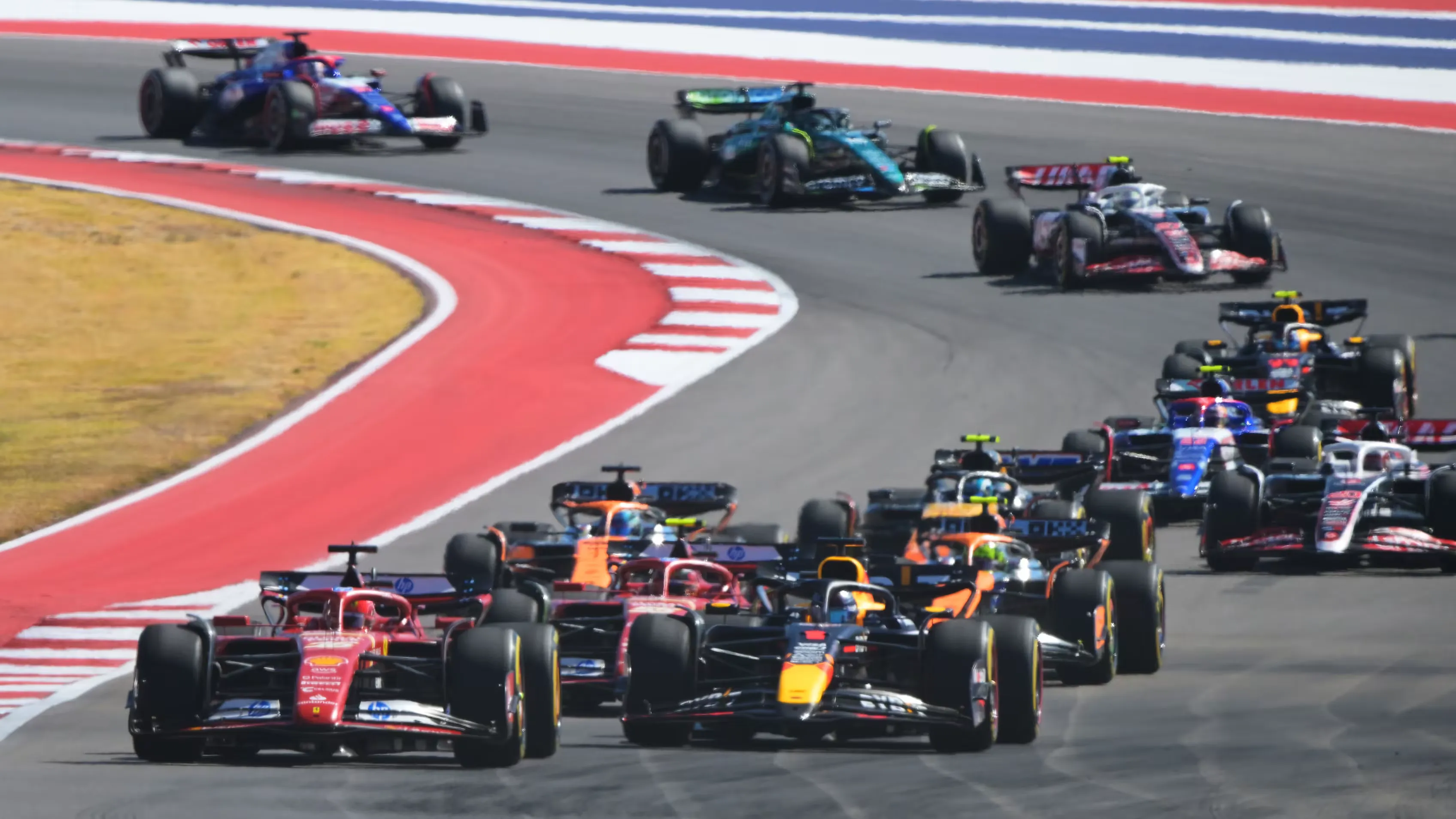
so, you’re new to F1. whether it’s the teams, drivers, terminology or memes that have you scratching your head, this series will help you find your way around the pinnacle of motorsport. part 1 is about the basics of a race weekend.
each race happens over the course of a weekend. sometimes there’s a week or a few in between. sometimes you get two races back-to-back, and sometimes even three.
thursday and friday
the weekend starts on thursday, which is media day. drivers and team personnel get interviewed, and it’s usually when each team’s social media admin films their content.
friday is entirely dedicated to practice (AKA, nobody watches on this day). there are two one-hour sessions, FP1 and FP2, where drivers get some laps in and the team works on the setup of the car. you’ll sometimes see an unfamiliar name in FP1: every team has to give each of its cars to a rookie twice a season, so drivers from series like formula 2 and super formula get a go.
sprint weekends are different. there are 6 of them in 2025, and on those there’s only one practice session on friday. what would have been FP2 gets replaced by sprint qualifying, which sets the grid for a short 100 km race on saturday (the sprint) that takes FP3’s slot.
saturday
saturday is the last day before the race. teams get one more hour of practice (FP3), and then it’s qualifying, where drivers go for the fastest lap they can to start as far up the grid as possible on sunday.
there’s a twist, though. qualifying has three parts, and the first two are elimination rounds. in Q1, the 5 slowest of the 20 drivers are knocked out. in Q2, the 5 slowest of the 15 that remain go too. Q3 has no eliminations: the 10 drivers left fight over 1st to 10th. first place in qualifying is called pole position, and it’s the best place to start the race from.
no points are awarded in qualifying (something i think should change), but a good lap on saturday makes your sunday a lot easier.
sunday
then you have sunday, which is race day. while the cars sit on the grid before the start, one of the commentators does a grid walk, wandering between the cars and talking about the drivers and any issues they’ve had over the weekend.
at the scheduled time, all the cars set off on a formation lap: one slow lap of the track to heat up their tires before lining up in the order they qualified in. five red lights come on one by one, and when they go out, it’s lights out and away we go.
how many laps you get depends on the track, because every race has to cover just over 305 km (monaco, the exception, gets away with 260). that works out to anywhere from 44 laps at spa to 78 at monaco. a normal race takes about an hour and a half, and there’s a two-hour cap on racing time.
tires
there’s a lot to keep track of during a race (strategy, safety cars, the weather), but tires are the most overlooked part of the sport. pirelli brings 3 “slick” compounds for dry weather to every weekend, plus 2 rain tires that never change:
- softs (red): the fastest, but they wear out quickly.
- mediums (yellow): a mix of the two.
- hards (white): the slowest, but they last very long.
- intermediates (green), or inters for short: for a damp track.
- wets (blue): for proper rain.
in a dry race everyone has to use at least two different slick compounds, which means at least one pit stop. it sounds straightforward, but every track has its own best strategy, and the weather can change all of it.
after the race, the top three (the podium finishers) get their trophies, and the national anthems of the winning driver and the winning team are played. then the drivers spray each other with champagne and the celebrations begin.
this is part 1 of a series for new fans of the sport. have fun reading.